Why Students Need More Than Recorded Video Classes?
Recorded video classes have changed the way students study. They allow learners to revisit lessons, pause difficult explanations, and learn at their own pace. However, watching…
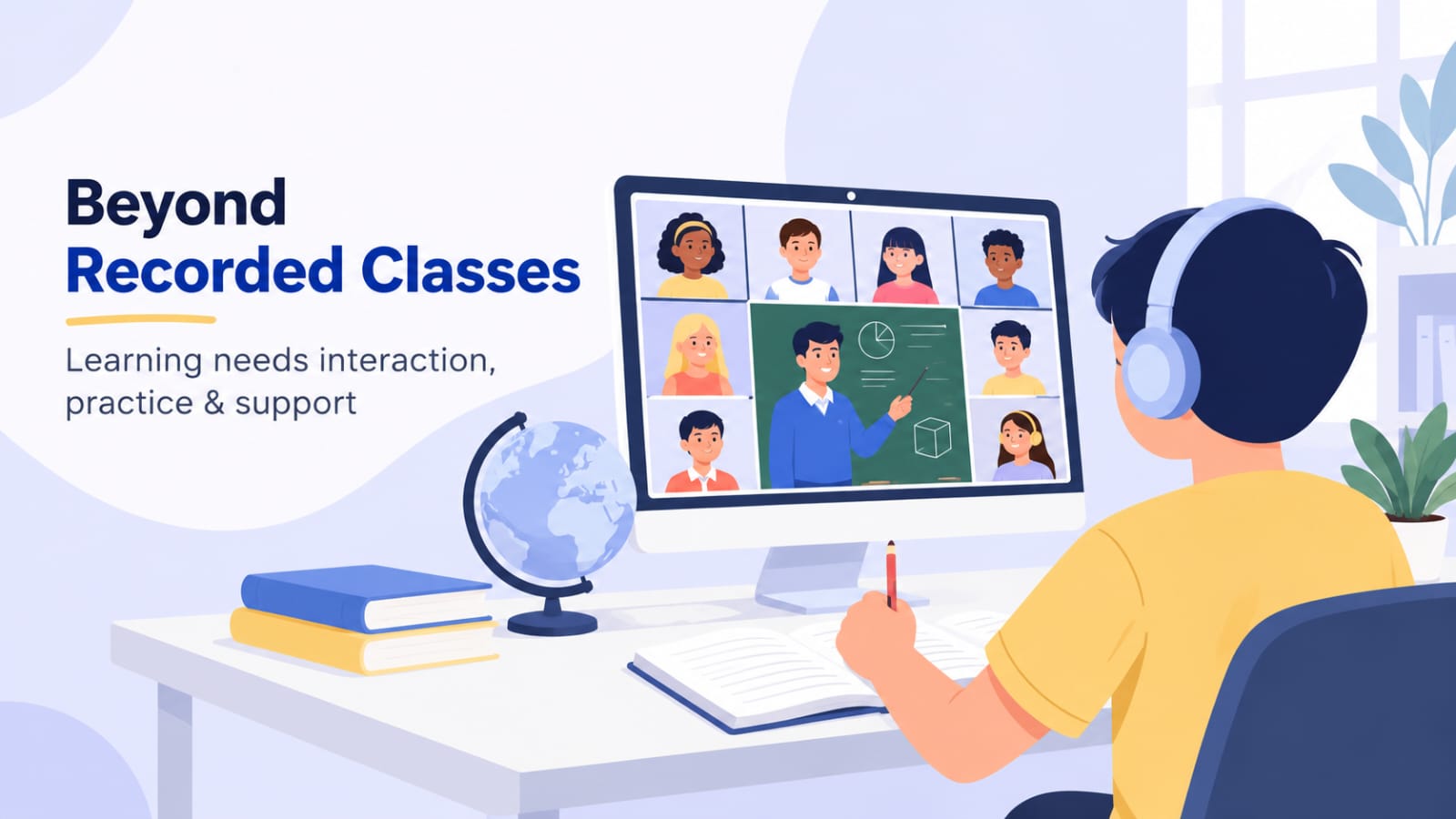
Recorded video classes have changed the way students study. They allow learners to revisit lessons, pause difficult explanations, and learn at their own pace. However, watching a lesson does not always mean understanding it.
1. Recorded Classes Cannot Always Clear Every Doubt
A recorded lesson provides the same explanation to every viewer. If a student does not understand a particular step, they may need to replay the video or search for another resource.
Rewatching can be helpful, but some doubts require a personalised explanation. Access to an appropriate teacher-support option can give students another way to ask questions and work through difficult concepts.
2. Learning Requires Active Practice
Watching a teacher solve a problem may make it seem easy. Solving a similar problem independently is a different challenge.
Students need opportunities to apply what they have learned through quizzes, practice questions, revision exercises, and tests. These activities can reveal gaps in understanding and help learners identify which topics need more attention.
3. Every Student Learns Differently
Some students understand a topic through visual examples, while others benefit from step-by-step explanations or repeated practice. A single recorded lesson may not meet every learner’s needs.
AI-powered learning tools can help by offering explanations, recommending practice activities, and suggesting resources based on a student’s learning progress. These tools can complement teaching, although their recommendations should be checked for accuracy and relevance.
4. Human Guidance Still Matters
Teachers do more than explain academic concepts. They can respond to a student’s specific question, recognise confusion, provide encouragement, and help learners approach a problem from another perspective.
When students have access to teacher support, they have another way to seek clarification instead of relying entirely on prerecorded explanations. The availability and timing of such support depend on the service being used.
Recorded Classes vs a More Complete Learning Experience
| Learning method | How it helps |
|---|---|
| Recorded video classes | Allow flexible learning and lesson revision |
| Practice questions and quizzes | Help students apply concepts and identify gaps |
| AI learning tools | Can offer explanations and personalised practice suggestions |
| Human teacher support | Provides an opportunity to ask questions and receive individual guidance |
| Progress tracking | Helps students review performance and plan further study |
The goal is not to replace recorded classes. It is to make them part of a broader learning approach that encourages understanding, practice, feedback, and independent thinking.
How VLM Academy Brings Learning Tools Together
VLM Academy offers a range of digital learning resources designed to support school students. Its student app includes video lessons, notes, practice questions, quizzes, tests, performance insights, and an AI learning assistant.
The platform also offers teacher-support options, giving students additional ways to seek help when they need guidance. By combining self-paced resources with practice and support, students can choose different ways to approach their learning needs.
Parents can explore the current features and service terms to determine whether VLM Academy suits their child’s class, syllabus, and learning goals.
Visit VLM Academy or explore the VLM Academy Student App.
Frequently Asked Questions
Are recorded video classes useful for students?
Yes. Recorded lessons allow students to learn at their own pace, pause explanations, and revise topics when needed. They are often most useful when combined with practice and opportunities to clarify doubts.
Can AI replace recorded classes and teachers?
AI can complement educational resources by providing explanations and practice suggestions, but it does not fully replace the value of structured teaching, human judgement, and personalised guidance.
What should students look for in an online learning platform?
Students and parents should consider content quality, syllabus relevance, practice activities, doubt-solving options, progress tracking, privacy, and cost before choosing a platform.
Conclusion
Recorded video classes are a valuable learning resource, but effective education involves more than watching lessons. Students also need practice, feedback, opportunities to ask questions, and guidance when concepts become difficult.
By combining flexible digital resources with AI-supported learning and human teacher support, students can build a more balanced study routine and work towards stronger understanding.
At VLM Academy, the aim is to support learning beyond the screen—helping students practise, ask questions, and keep growing.