
How to Build Effective Study Habits for Academic Success?
Do you sit down to study but find yourself distracted, struggling to remember what you learned, or running out of time before an examination? You are…
Do you sit down to study but find yourself distracted, struggling to remember what you learned, or running out of time before an examination? You are not alone. Many students face these challenges, and the solution is not always to study for longer hours.
What Are Effective Study Habits?
Effective study habits are regular practices that help students learn, remember, and apply information. They include planning study sessions, revising lessons, practising questions, managing distractions, and asking for help when a concept is difficult.
The best study routine is one that fits your timetable, learning needs, and school workload. You do not need to follow someone else’s schedule exactly to make progress.
7 Study Habits Every Student Should Develop
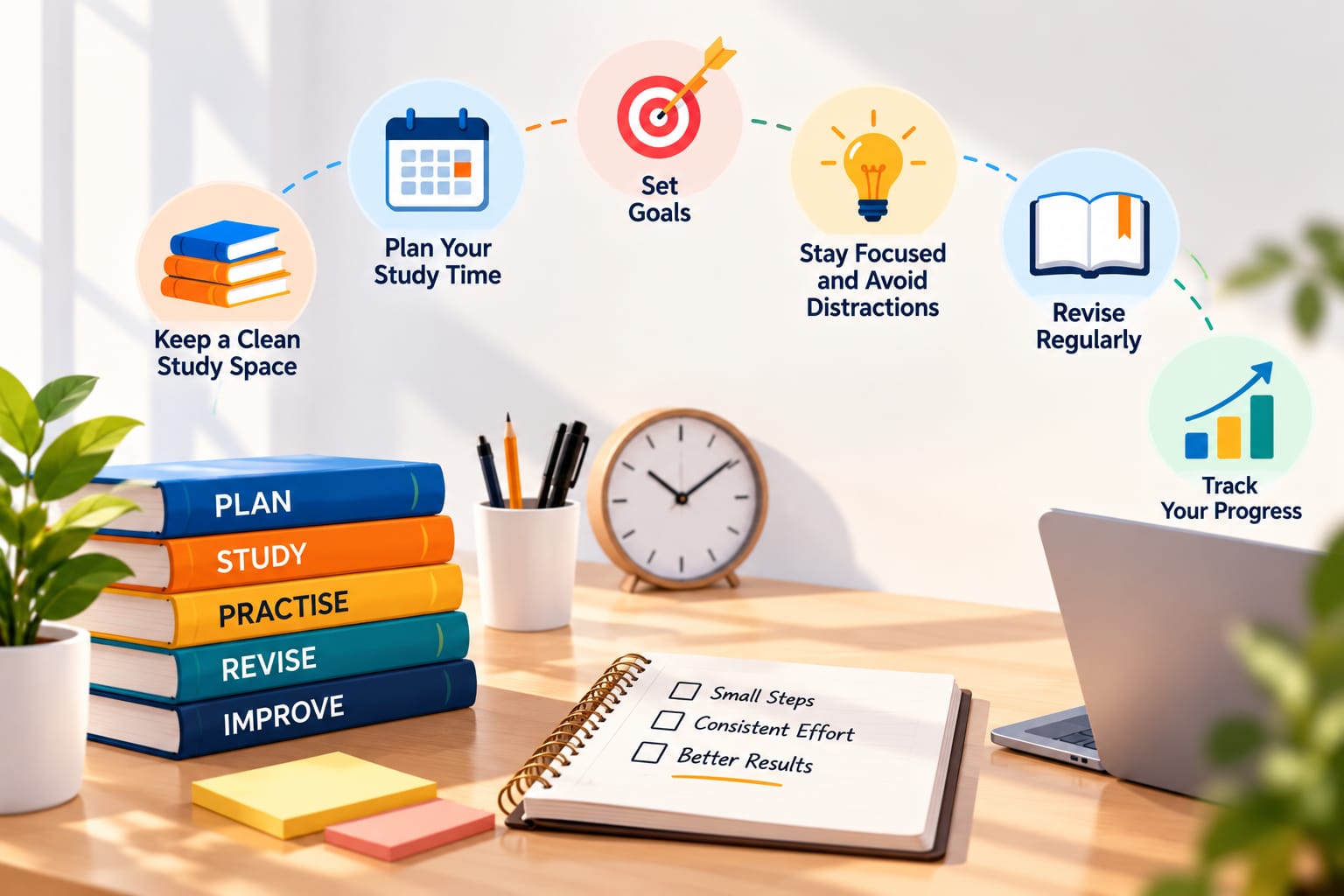
1. Follow a Realistic Study Timetable
Planning your study time helps you balance schoolwork, homework, revision, and rest. Set specific goals for each session instead of writing a vague task such as “study science.”
For example, you could plan to revise one chapter, solve ten practice questions, or review a difficult formula. Keep your goals achievable and adjust your timetable when necessary.
2. Study in Short, Focused Sessions
Long study sessions can become tiring, especially when you lose concentration. Try studying for a manageable period, followed by a short break. You can experiment with a 25-minute study session and a five-minute break, then adjust the timing to suit your needs.
During each session, focus on one task and keep your phone and unrelated notifications away.
3. Revise Regularly Instead of Cramming
Leaving all revision until the night before an examination can make learning stressful. Revisiting information over several days or weeks gives you repeated opportunities to strengthen your understanding.
After learning a topic, review it the next day, then again after a few days. Adapt your revision schedule according to how well you remember the material.
4. Practise Active Recall
Reading the same page repeatedly may feel productive, but it does not always show whether you can remember the information independently.
After studying a topic, close your book and try to explain the main ideas in your own words. Answer questions without looking at the solution, then check your work and correct mistakes.
5. Solve Practice Questions
Practice questions help you apply what you have learned. They are particularly useful for subjects that involve calculations, problem-solving, or structured answers.
Start with basic questions to check your understanding, then gradually attempt more challenging ones. Review mistakes carefully and identify the step where your reasoning went wrong.
6. Ask for Help When You Get Stuck
Do not let one confusing concept prevent you from progressing through an entire chapter. Identify the exact point you do not understand and revisit your notes, textbook, or a reliable educational resource.
If the confusion continues, ask a teacher or use an appropriate learning tool for another explanation. After clearing the doubt, solve a similar question independently to check your understanding.
7. Protect Your Sleep and Take Breaks
Studying effectively also means giving your mind time to rest. Adequate sleep, regular breaks, physical activity, and a balanced daily routine can support attention and memory.
Avoid sacrificing sleep to complete unnecessary late-night study sessions. A realistic plan that includes rest is easier to maintain than a routine built around constant pressure.
How Technology Can Support Better Study Habits
Digital learning tools can help students organise their revision, access educational resources, practise questions, and review their progress. AI learning assistants may offer alternative explanations or suggest additional practice when a topic feels difficult.
However, technology should support active learning rather than replace it. Avoid copying answers without understanding them, verify important AI-generated information, and make time for independent practice away from screens.
How VLM Academy Can Help Students Practise Consistently
VLM Academy provides digital learning resources for school students, including an AI learning assistant, video lessons, notes, practice questions, quizzes, tests, and performance insights through its student app.
These resources can help students revisit concepts, practise what they have learned, and identify topics that may need further attention. VLM Academy also offers teacher-support options for students who need additional academic guidance.
Students and parents can explore the available features and service terms to see whether they suit their learning needs.
Visit VLM Academy or explore the VLM Academy Student App.
Frequently Asked Questions
What is the most effective study habit?
There is no single method that works best for every student. Regular revision, active recall, practice questions, and a realistic study schedule are useful strategies to try and adapt to your needs.
How many hours should a student study daily?
The appropriate amount depends on the student’s age, class, school timetable, workload, and individual needs. Focus on the quality and consistency of study rather than simply counting hours.
How can I stop getting distracted while studying?
Choose a quiet study space, set a clear goal for each session, silence unnecessary notifications, and take planned breaks. If your attention drifts, return to the task without being overly critical of yourself.
Conclusion
Effective study habits are built through small actions repeated consistently. Planning your time, revising regularly, practising questions, asking for help, and maintaining a healthy routine can make learning more organised and productive.
Remember that progress does not require a perfect timetable. Start with one or two changes, evaluate what works for you, and gradually build a routine you can maintain.
VLM Academy — Helping students learn, practise, and grow with confidence.